



The best time to visit Phuket is the dry season, from about November to April, with the most settled weather from mid-December to February. In those months the west-coast sea, including Nai Harn, is usually calm and clear for swimming. From May to October the southwest monsoon brings rain, big waves, rip currents and frequent red flags, while the sea stays around 29–30 °C all year.
Last updated: 22 October 2026
Best time to visit Phuket: two seasons, not four
Phuket's year splits into two seasons. The dry or high season runs from about November to April. November is a transition month, and the peak, with the best weather and the highest prices, falls from mid-December to February.
The wet or low season follows the southwest monsoon, from about May to October. The Thai Meteorological Department declares the start of the rainy season each year, typically in May. September and October are usually the wettest months, and the monsoon rains usually ease around the end of October.
Daytime highs average about 31–34 °C year-round, and the sea stays at about 29–30 °C, so Phuket is never cold. What changes is the rain and, above all, the sea.
Phuket month by month
Conditions below describe the west coast, where Nai Harn sits. Every year is a little different, so treat the months either side of each season as variable.
| Month | Season | Weather and sea (west coast) | Good for |
|---|---|---|---|
| January | Dry, peak | Settled weather; sea usually calm and clear | Beach swimming, sunsets at Promthep Cape, island trips |
| February | Dry, peak | Settled weather; sea usually calm and clear | Swimming, snorkelling at Ya Nui, kayaking to Koh Man |
| March | Dry, hot season begins | Heat building; sea usually calm | Swimming, early-morning and late-afternoon outings |
| April | Dry, hottest month | Hottest of the year, peaks can reach the high 30s °C; sea usually calm | Songkran (13–15 April), swimming, pool days |
| May | Monsoon begins | Rainy season usually declared; waves start to build and red flags become more common | Pool days, sightseeing on land; swim only where flags allow |
| June | Wet, low | Southwest monsoon; big waves and rip currents, red flags often up | Surf at Nai Harn for experienced surfers, pool days |
| July | Wet, low | Southwest monsoon; big waves and rip currents, red flags often up | Surf, temples and viewpoints, Phuket Old Town |
| August | Wet, low | Southwest monsoon; big waves and rip currents, red flags often up | Surf, Big Buddha and Wat Chalong, pool days |
| September | Wet, low | Usually one of the wettest months; rough sea | Indoor and land-based sightseeing, Phuket Aquarium |
| October | Wet, low | Usually one of the wettest months; rains usually ease towards the end | Land-based sightseeing, pool days |
| November | Transition to dry | Monsoon ending; sea gradually calming, check flags | Early-season beach days, lake walks |
| December | Dry; peak from mid-month | Settled weather; sea usually calm and clear | Swimming, sunsets, festive breaks |
Sea conditions at Nai Harn: calm months and red flags
From about November to April, Nai Harn Beach is generally calm, which makes it one of Phuket's best swimming beaches in those months. Small coves nearby, such as Ya Nui, are good for snorkelling and kayaking when the sea is settled; see our guide to beaches near Nai Harn.
From about May to October, the southwest monsoon sends strong waves and moving "flash rips" onto west-coast beaches, even on clear, blue-sky days. Red flags mark no-swimming areas and go up often. Lifeguards are typically on duty at Nai Harn; swim only between the yellow-and-red flags near them, and never when red flags are flying. The same low-season swell is what draws surfers to Nai Harn.
Heat and rain: what to expect
- Hot season: March to May is the hottest period, with April usually the hottest month. Peaks can reach the high 30s °C, so plan outdoor sightseeing for mornings and late afternoons.
- Rainy season: rain arrives with the monsoon, usually from May, and is heaviest in September and October.
- Sea temperature: about 29–30 °C all year, so the water is warm whenever it is safe to swim.
- Temples: whatever the weather, pack something that covers knees and shoulders for Wat Nai Harn, Wat Chalong and the Big Buddha.
High season or low season: which suits you?
Choose mid-December to February if beach time is the priority and you want the most reliable weather. These are also the busiest weeks, with the highest prices, so book early.
Choose November or March–April for dry-season sea conditions either side of the peak. Expect more heat in March and April.
Choose May to October if you are a surfer, if you are coming to train (see Muay Thai in Rawai and Nai Harn), or if you are happy to swim in a pool rather than the sea. Island trips and beach swimming depend more on the day's conditions in these months.
Songkran in April
Songkran, the Thai New Year water festival, runs from 13 to 15 April. In Phuket the main celebrations are at Patong, Kata and Karon. Nai Harn, low-rise and quiet, makes a calmer base: join the water fights up the coast, then come home to your own pool in the hottest month of the year.
Why a private pool villa works in any season
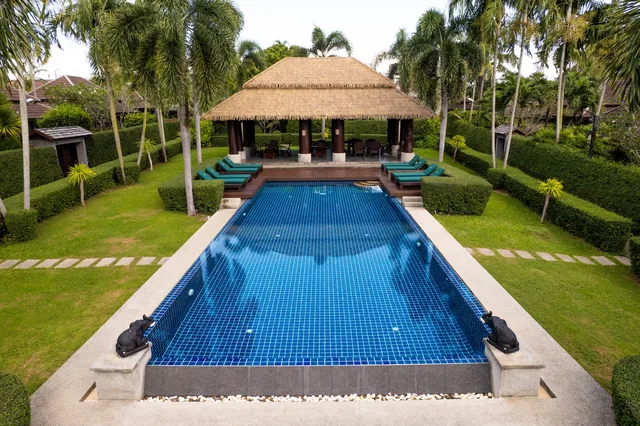
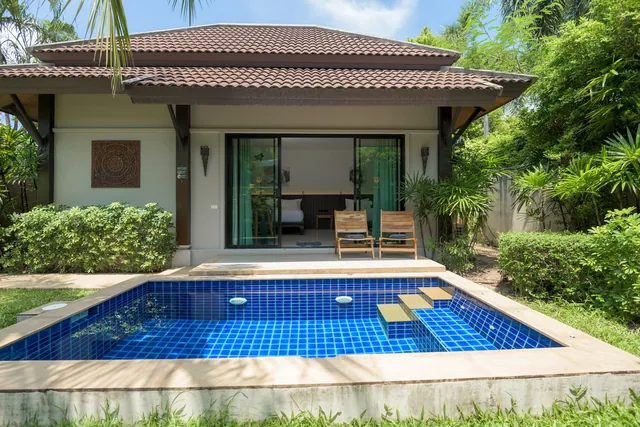
The sea at Nai Harn changes with the monsoon, but your pool doesn't. Every villa at Green Garden Villas has its own private swimming pool and tropical garden, plus a shared pool and sunbathing area for all guests. When red flags are up at the beach, you still swim every day.
On wet evenings, the fully equipped kitchens in our two-bedroom and three-bedroom villas make staying in easy, and restaurants and a 7-Eleven are within walking distance. In the dry season, Nai Harn Beach is 2.2 km (1.4 miles) away and Promthep Cape, with sunset around 18:00–18:30, is close by. Compare villas on our private pool villa page, then book direct.
Local tips
- Peak-season weeks from mid-December to February fill first, so book your villa as soon as your dates are fixed.
- Blue sky does not mean a safe sea in the monsoon months: flash rips form on clear days, so always check the flags before swimming.
- In March and April, save walks and viewpoints for early morning or late afternoon, and spend the midday heat in the pool.
- November is a transition month, so the sea can still be lively early on; check the flags rather than the calendar.
- For Songkran, keep valuables and phones in waterproof pouches if you head to the Patong, Kata or Karon celebrations.
Frequently Asked Questions
What is the best month to visit Phuket?
For the most reliable weather, visit from mid-December to February, the peak of the dry season. November and March–April are also dry, with April the hottest month.
When is the rainy season in Phuket?
The southwest monsoon season runs from about May to October. September and October are usually the wettest months, and rains usually ease around the end of October.
Is it safe to swim at Nai Harn in the low season?
From about May to October, Nai Harn often has big waves and rip currents, and red flags go up frequently. Swim only between the yellow-and-red flags near lifeguards, and never when red flags are flying.
What is the hottest month in Phuket?
April is usually the hottest month, within a hot period from March to May. Peaks can reach the high 30s °C, while average daytime highs are about 31–34 °C all year.
How warm is the sea in Phuket?
The sea stays at about 29–30 °C all year round.
When is Songkran in Phuket?
Songkran runs from 13 to 15 April. In Phuket the main celebrations are at Patong, Kata and Karon.
Is Phuket worth visiting in the low season?
Yes, if you plan around the sea: surfers enjoy the swell at Nai Harn, and temples, viewpoints and the Old Town are open year-round. A villa with a private pool means you can swim every day even when beaches are flagged.